

Athletes often rely on metrics: miles, weight lifted, heart rate, or heart rate variability (HRV), but these numbers only tell part of the story. Rate of Perceived Exertion (RPE) is a subjective measure of how hard your body feels it is working. It reflects both physiological strain and mental effort, offering real-time insight into training intensity and recovery.
RPE captures sensations such as breathing effort, muscle fatigue, and cardiovascular strain. Commonly rated on a 1-10 or 6-20 scale [1],[2], it ranges from very light activity to maximal exertion. Unlike objective metrics, RPE integrates daily variations in fatigue, sleep, nutrition, and stress, making it sensitive to how your body is truly responding on any given day.
RPE helps guide intensity across endurance and strength sessions. For example, moderate cardio may feel like a 6 or 7, while high-intensity intervals may reach 8 or 9. In resistance training, rating sets by effort rather than absolute weight can help ensure adequate challenge without compromising form. RPE is especially useful for athletes who cannot rely on heart rate to gauge intensity, such as those taking medications that affect heart rate or during activities where heart rate monitors are impractical. Consistent tracking builds awareness of training load, highlights fatigue, and informs recovery strategies.
While subjective, RPE often correlates with physiological markers such as heart rate, lactate accumulation, and oxygen consumption [1],[3]. Using RPE alongside data like heart rate zones or heart rate variability (HRV) provides a more complete picture of readiness, adaptation, and recovery. Persistent elevations in RPE relative to objective load can indicate accumulated fatigue or insufficient recovery.
The Bottom Line
RPE is a simple, evidence-based tool that complements objective measures, allowing athletes to adjust training in real time, optimize performance, and reduce injury risk.
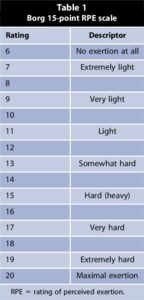
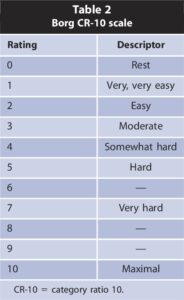
Image credit: Morishita S, Tsubaki A, Takabayashi T, Fu JB. Relationship Between the Rating of Perceived Exertion Scale and the Load Intensity of Resistance Training. Strength and Conditioning Journal. 2018;40(2):94-109. doi:https://doi.org/10.1519/ssc.0000000000000373
References
- Mahaffey K. The Rate of Perceived Exertion (RPE) Scale Explained. blog.nasm.org. Published 2022. https://blog.nasm.org/rate-of-perceived-exertion
- Morishita S, Tsubaki A, Takabayashi T, Fu JB. Relationship Between the Rating of Perceived Exertion Scale and the Load Intensity of Resistance Training. Strength and Conditioning Journal. 2018;40(2):94-109. doi:https://doi.org/10.1519/ssc.0000000000000373
- Lea JWD, O’Driscoll JM, Hulbert S, Scales J, Wiles JD. Convergent Validity of Ratings of Perceived Exertion During Resistance Exercise in Healthy Participants: A Systematic Review and Meta-Analysis. Sports Medicine – Open. 2022;8(1). doi:https://doi.org/10.1186/s40798-021-00386-8
